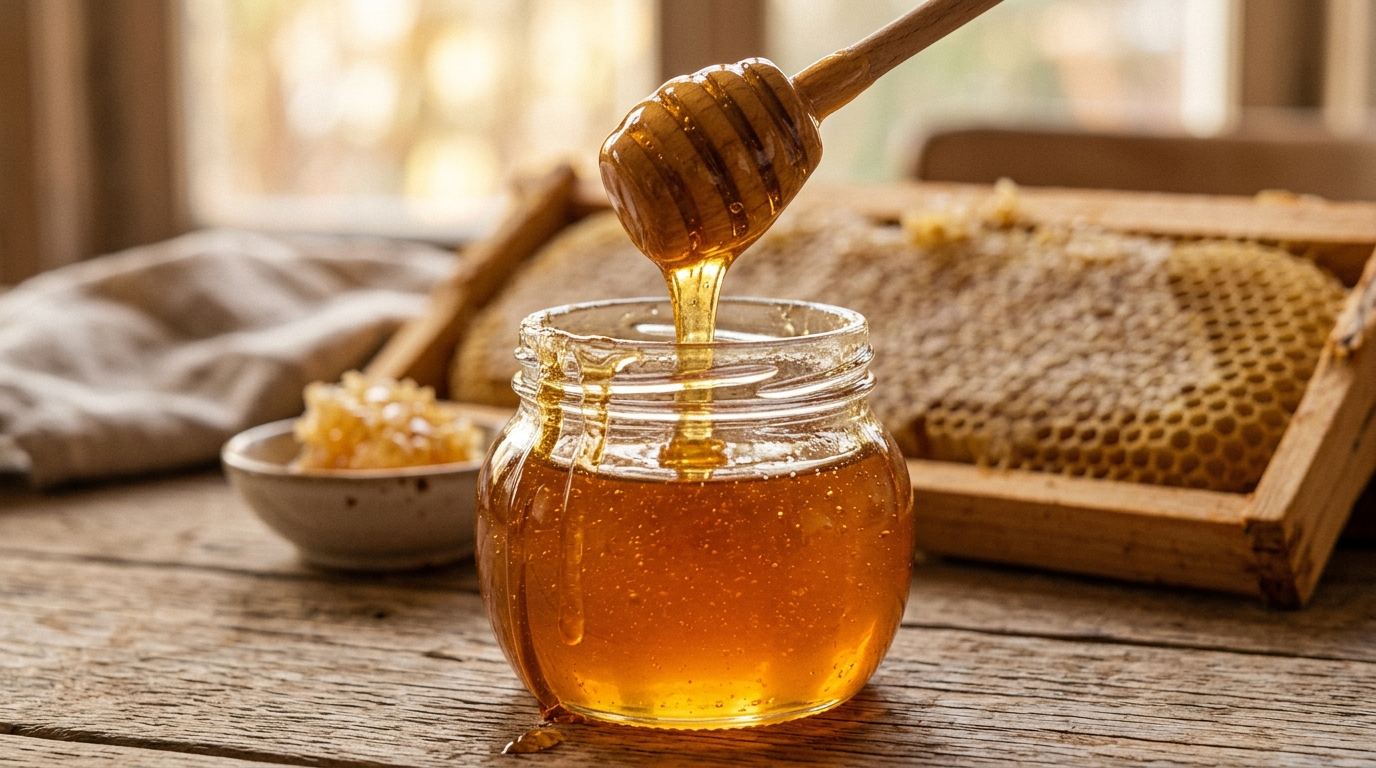
Almost all food spoils eventually. Bread grows mould, milk turns sour and fruit rots. Honey, however, is a remarkable exception. If it is kept sealed, honey can remain edible for an astonishingly long time — archaeologists have even found pots of honey in ancient tombs, thousands of years old, that were still perfectly good.
The reason lies in what makes food go bad in the first place. Spoilage is usually caused by microorganisms such as bacteria and moulds, and these need water to grow. Honey contains very little water; it is thick, dense and extremely sugary. In such a concentrated environment, water is actually drawn out of any microbes, so they cannot survive or multiply.
Honey has a second defence, too: it is naturally acidic, which further discourages bacteria. Together, low moisture and acidity make it a very hostile place for spoilage organisms. There is one important condition, however. Honey must be kept sealed and dry, because it readily absorbs moisture from the air. If enough water gets in, honey can ferment and spoil. Stored properly in a clean, closed jar, though, it can outlast almost any other food.