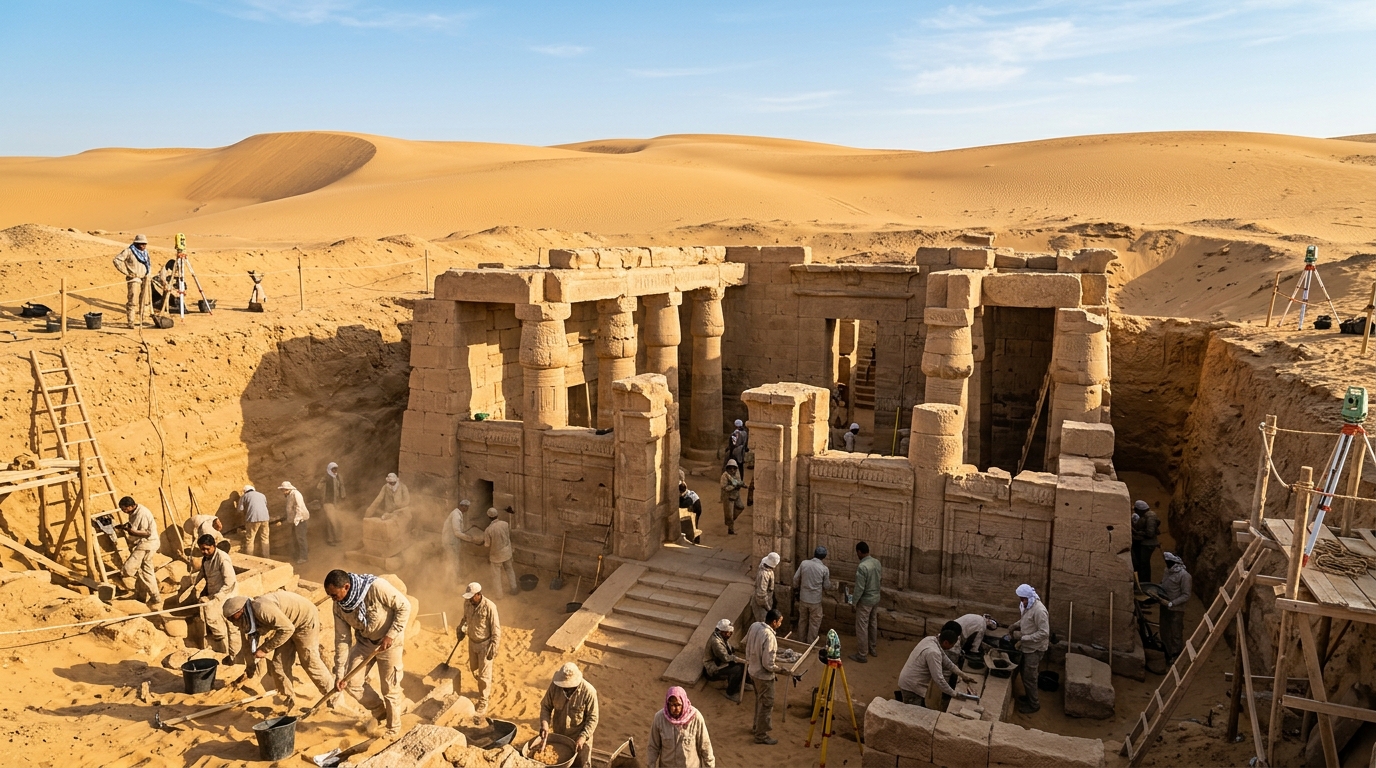
Egypt is one of the most studied places on Earth. For more than two centuries, explorers and archaeologists have dug into its deserts, and the discovery of Tutankhamun's golden tomb in 1922 made headlines around the world. It would be easy to assume that everything important has already been found — but the opposite seems to be true.
Even today, archaeologists regularly uncover new treasures beneath the sand. They find tombs decorated with bright paintings, temples, statues, and sometimes entire cities that had been lost for thousands of years. Some discoveries reveal the graves of officials and priests, complete with objects buried to help them in the afterlife.
Modern technology has transformed the search. Instead of digging blindly, teams can now use scanning equipment and satellite images to detect walls, tombs and empty chambers hidden underground. This allows them to focus their efforts and avoid damaging what lies beneath.
Perhaps the most exciting idea is how much remains undiscovered. Many experts believe that only a fraction of ancient Egypt has been unearthed, and that the greater part still lies buried and waiting. Each new find adds another page to a story thousands of years old, and every season in the field brings the possibility of a discovery that could rewrite what we know about this remarkable civilisation.
For archaeologists, that very uncertainty is what makes the work so exciting. Nobody can say for sure what the next season of digging will bring to light.