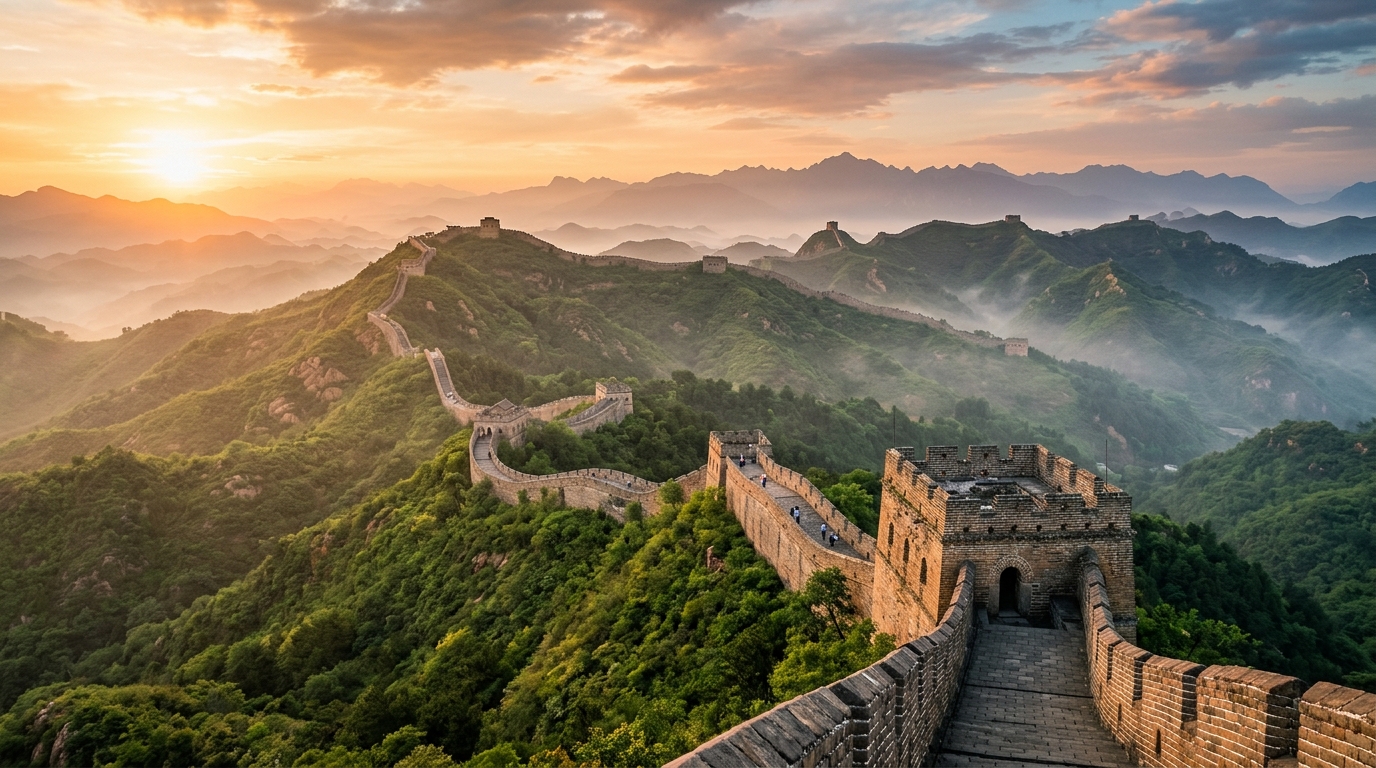
The Great Wall of China is one of the most famous structures in the world, but it is often misunderstood. Many people imagine a single, continuous wall, when in fact it is a network of many separate walls. These were built by different rulers at different times, across a period of more than a thousand years.
The main purpose of the walls was defence. For centuries, groups from the northern lands launched attacks on China, and its rulers responded by building barriers along the border. The earliest walls were made simply from packed earth. Later, during powerful dynasties, workers rebuilt sections in brick and stone, creating the taller, stronger walls that visitors admire today.
Constructing the wall demanded an enormous amount of labour. Vast numbers of soldiers, farmers and prisoners were sent to carry heavy materials across steep mountains and remote deserts. The conditions were harsh, and many workers lost their lives. Because of this, the Great Wall stands not only as a symbol of China's power but also as a reminder of the countless ordinary people who built it.