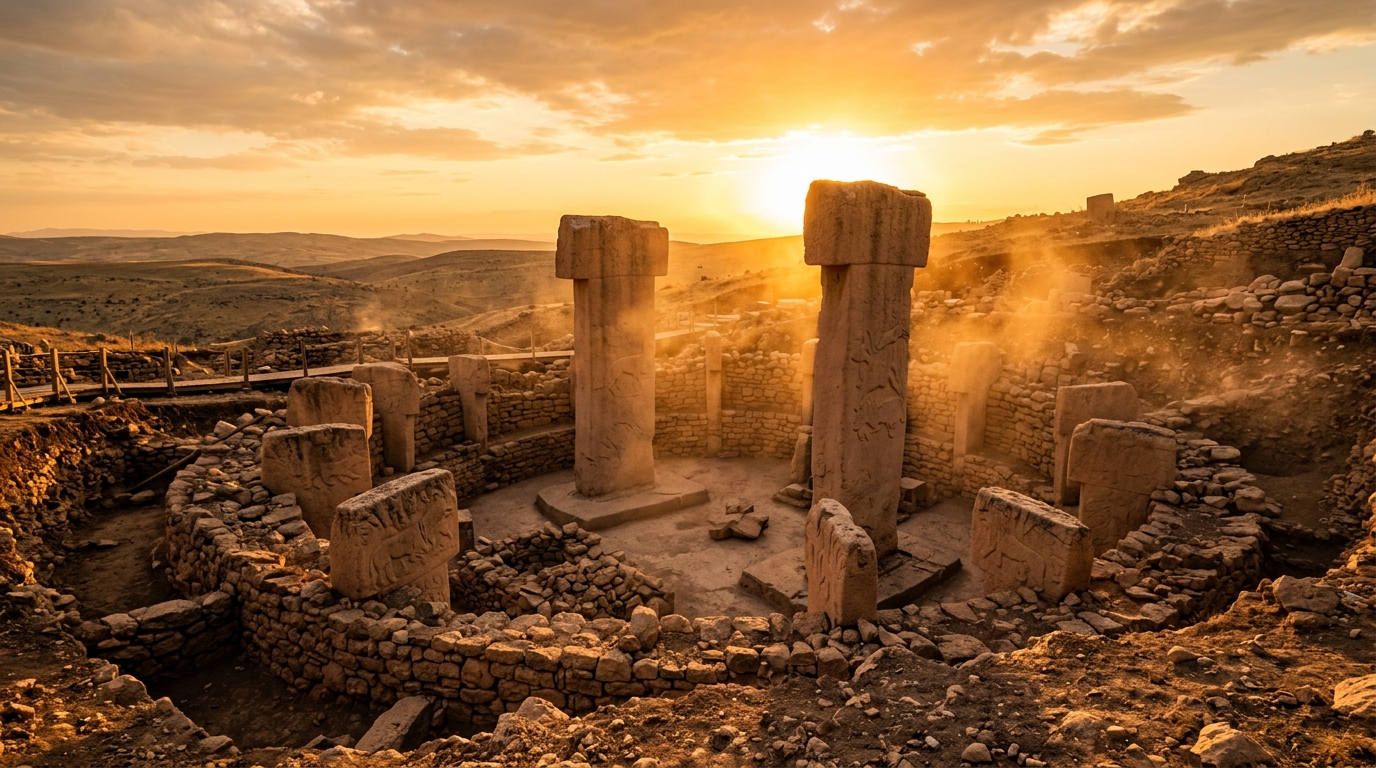
In the south of Turkey stands an extraordinary site called Göbekli Tepe. Built around 11,000 years ago, it is far older than the pyramids of Egypt and counts among the oldest large monuments ever discovered. Its age alone makes it remarkable, but the real surprise lies in who created it.
The site is famous for its huge stone pillars, arranged in circles. Many are several metres tall and weigh several tonnes, and they are decorated with carefully carved animals — foxes, snakes, boars and birds. Producing and moving such stones required real skill, planning and teamwork.
What astonishes archaeologists is that Göbekli Tepe was built by hunter-gatherers, people who lived by hunting animals and collecting wild plants, before farming and permanent towns had developed. For a long time, experts believed that only settled, farming societies could organise large building projects. Göbekli Tepe suggests the opposite may be true: perhaps the desire to gather for ceremonies and shared beliefs helped bring people together, and that cooperation may even have encouraged them to settle down. The site continues to reshape our understanding of the distant human past.