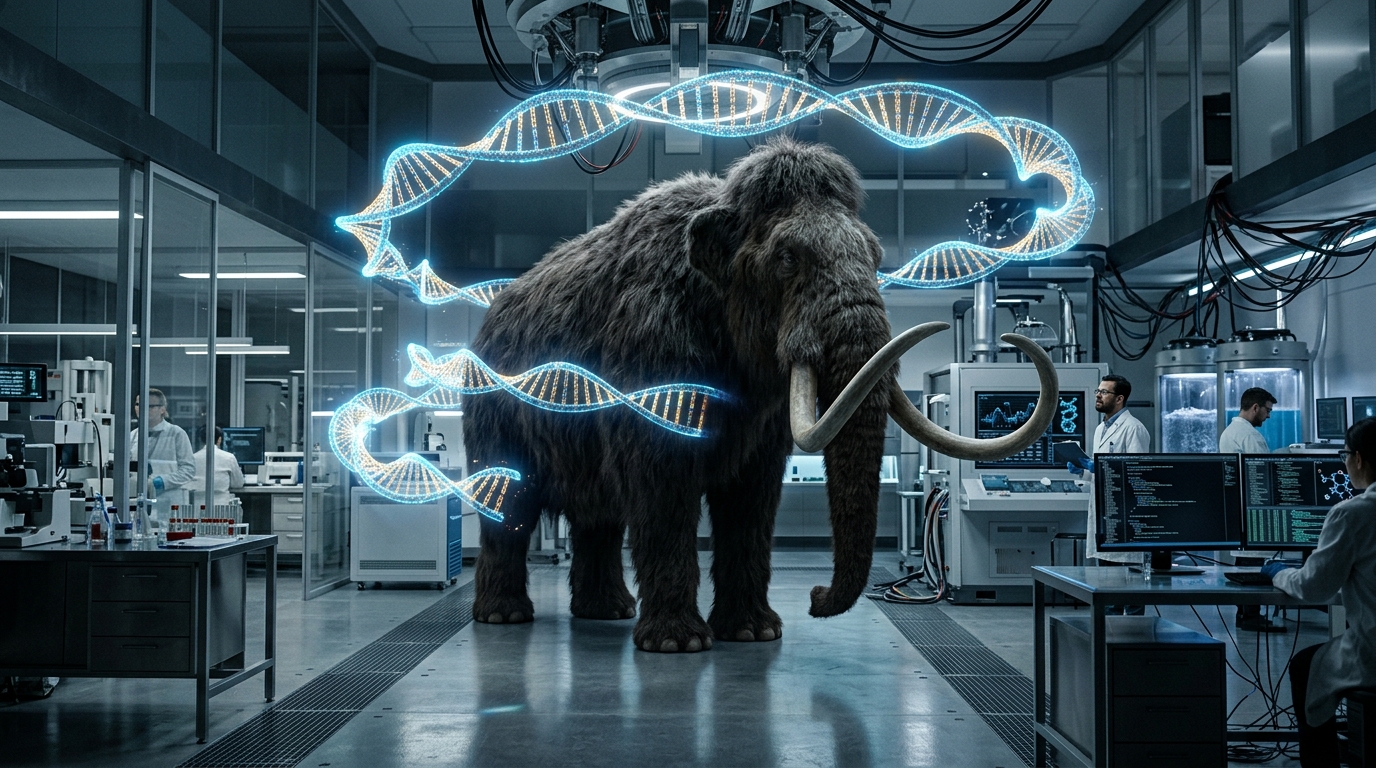
Throughout history, many animals have vanished from the Earth. Some disappeared naturally; others were lost because of humans. The woolly mammoth — a huge, hairy relative of the elephant — died out thousands of years ago. Today, a growing number of scientists are asking a bold question: could we bring such animals back? The effort even has a name — "de-extinction".
The idea depends on DNA, the chemical instructions found inside every living thing. Researchers search for fragments of ancient DNA preserved in old bones, teeth or specimens kept in museums. They then compare this DNA with that of a close living relative. In the case of the mammoth, that relative is the modern elephant. By carefully editing the genes of the living species, scientists hope to create an animal that looks and behaves like the one that was lost.
The work is extraordinarily difficult, and no fully "revived" species yet exists. But the science is advancing quickly, and that raises a deeper question — not whether we can, but whether we should. Supporters argue that returning lost animals could help repair damaged ecosystems. Critics reply that the money and effort would be better spent protecting the many species that are alive but endangered right now. The debate is far from settled, and it forces us to think carefully about our responsibilities to the natural world.