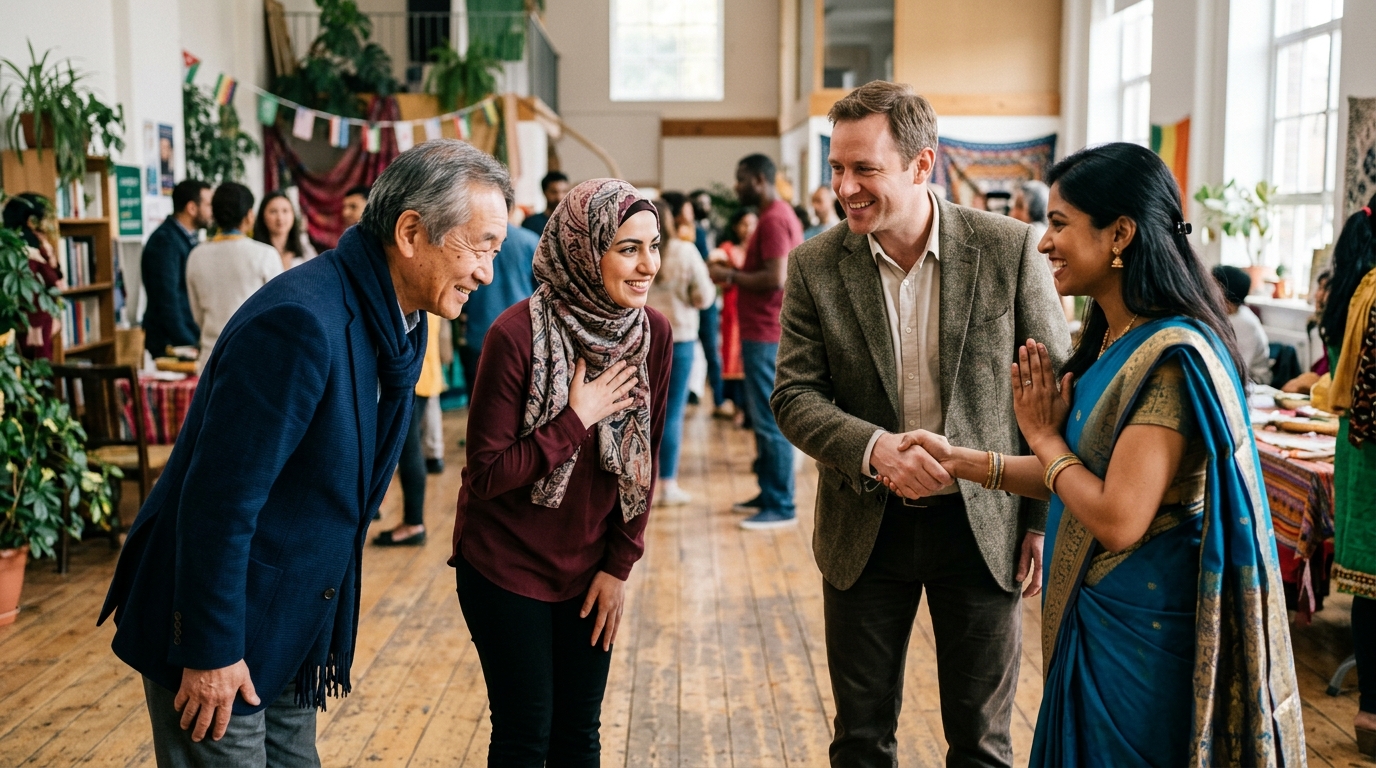
Whenever people meet, they greet each other — but the way they do it varies enormously from one culture to another. A gesture that feels completely natural in one country can seem unusual, or even rude, in another.
In many parts of the world, people shake hands when they meet. In Japan, a bow of the head is a common and respectful greeting. In much of southern Europe, friends often exchange a light kiss on each cheek, while in other regions people press their palms together and bow slightly, or simply smile and wave. Each of these gestures carries its own quiet message.
So why do greetings differ so much? The answer lies in history and values. Many greetings developed as a way of showing respect or signalling friendship. One popular idea is that the handshake began as a way of proving that your hand held no weapon. Whatever their origins, greetings still matter today. When travelling, taking the time to learn the local way of saying hello is a small act of politeness that can open doors and help you connect with people.