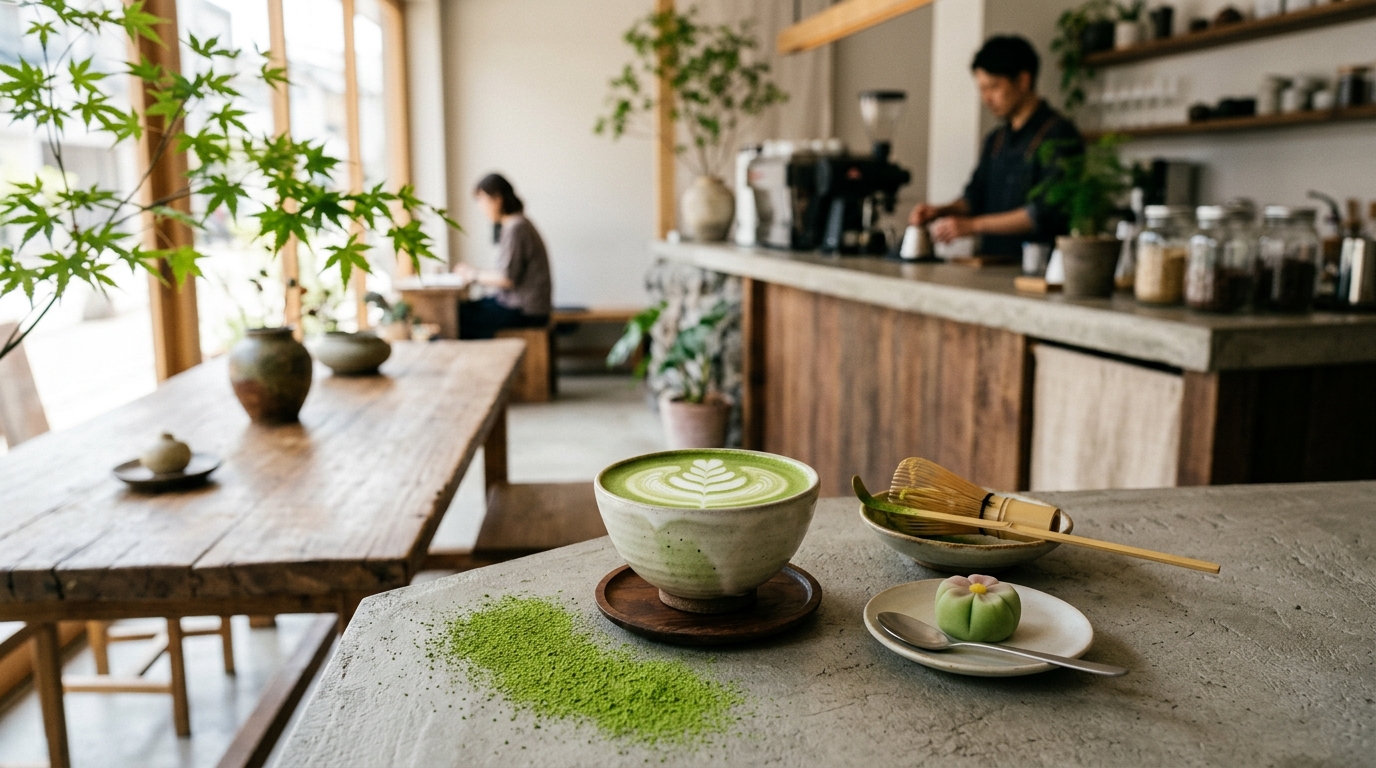
Matcha is a vivid green tea that has travelled a long way from its origins. It is made by taking special green tea leaves, drying them, and grinding them into an extremely fine powder. To prepare the drink, the powder is mixed with hot water and whisked until it becomes smooth and slightly frothy.
The tradition began in Japan, where matcha has been prepared for centuries. In the famous Japanese tea ceremony, making and serving matcha is done slowly and with great care, treated almost as a form of meditation. Every movement has meaning, and the focus is on calm and respect.
What sets matcha apart from ordinary tea is simple but important. With most teas, the leaves are soaked in water and then thrown away, so you drink only what has dissolved. With matcha, the leaf itself is ground up and consumed, so you take in the whole thing. Many drinkers say this gives them a gentle, lasting energy rather than a sudden rush.
Over the past few years, matcha has become a worldwide trend. Cafés far from Japan now sell matcha lattes, cakes and ice cream, and its bright colour is instantly recognisable on social media. Demand has grown so quickly that Japanese producers have sometimes struggled to grow enough, and shortages have appeared. A centuries-old tradition has, quite suddenly, become a global favourite.