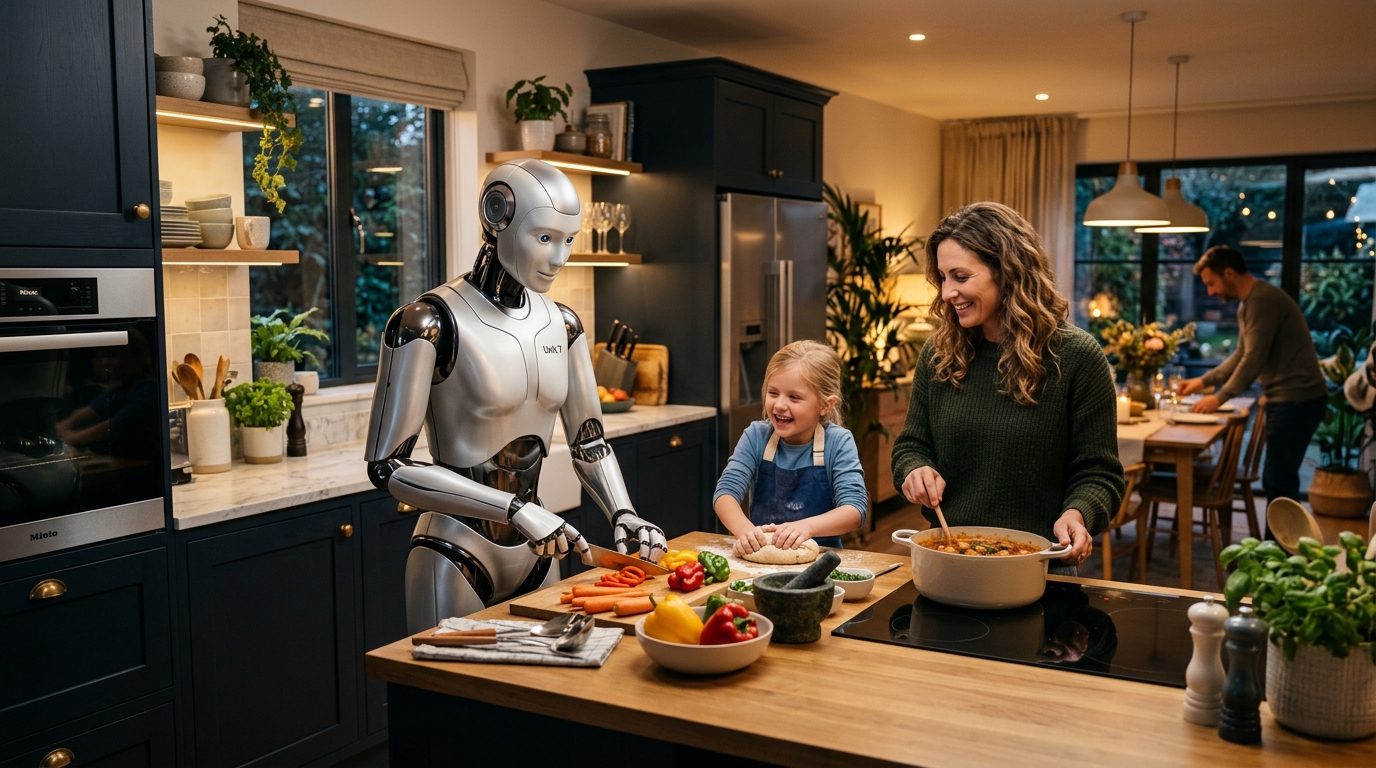
For decades, robots were mostly hidden away in factories, welding cars or lifting boxes on production lines. They were powerful but limited, repeating a single task over and over. That picture is now changing quickly. Around the world, companies are building "humanoid" robots — machines shaped like people, with a head, two arms and two legs.
These robots rely on cameras to see their surroundings and on artificial intelligence, or AI, to make sense of what they observe. With this combination, they can walk across a room, keep their balance, pick up objects of different shapes, and carry them from place to place. Some can climb stairs, open doors or handle delicate items without crushing them.
At the moment, most humanoid robots are being tested in warehouses and factories, where they do heavy or repetitive work. But the real goal for many companies is the home. Picture a robot that carries the shopping, tidies rooms, or supports elderly people who live alone and need a helping hand.
Several challenges stand in the way. A home robot must be completely safe around children and pets, since a heavy machine could easily cause harm. It must be affordable enough for ordinary families, and simple enough that anyone can use it without training. These problems are hard, but progress is fast, and living alongside a robot may be closer than we think.